Blueprint Font: Elegant Calligraphy for Digital Creators
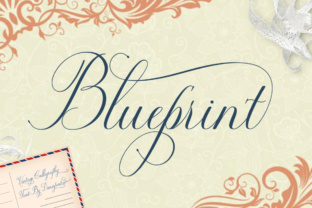
If you build websites, design landing pages, or craft digital brand experiences, selecting the right typeface is not just an aesthetic decision—it’s a strategic one. Blueprint is a gorgeous calligraphy font from the Script Handwritten category that instantly transforms any layout with a sense of refined elegance. This premium font comes packed with beautiful alternative characters, making it a versatile tool for designers who need to convey style, sophistication, and personality without sacrificing digital readability. In this guide, we’ll explore how Blueprint works across real web environments, from hero titles and e-commerce banners to mobile layouts and brand identity systems.
Blueprint Script Font for Hero Titles and Website Headers
Blueprint, a script handwritten font from the Fonts collection, brings an unparalleled elegance to hero titles and website headers. When you drop this calligraphy typeface into a landing page, it instantly establishes a refined brand tone. The flowing letterforms and carefully designed alternates give headlines a bespoke, hand-lettered feel that generic display fonts cannot replicate. I’ve used Blueprint on creative portfolios and lifestyle brand sites, replacing bold sans serif titles with its airy, graceful strokes. The result always improves visual hierarchy because the script naturally pulls the eye to the message, then lets the supporting body text recede. Because Blueprint includes multiple alternates, you can even tweak individual characters to avoid repetition and make the hero section feel tailor-made for the brand. For maximum impact, I set the hero headline in Blueprint at a generous size with plenty of white space, then pair it with a simple sans serif for the subheadline and call-to-action. This contrast keeps the layout clean while ensuring that the script font remains the emotional centerpiece of the page.
Pairing Blueprint Font with Sans Serif Typefaces for Digital Readability
As a script handwritten font, Blueprint shines brightest when paired with a clean, modern sans serif typeface for body copy. In web design, the most common mistake I see is using a highly decorative display font for long paragraphs, which kills readability and user engagement. Instead, Blueprint fonts should lead the headline, a short tagline, or a decorative accent, while the heavy lifting of text is handled by a neutral sans serif like Inter, Outfit, or Open Sans. This font pairing creates a clear division: the script font carries emotion and elegance, while the sans serif provides structure and scannability. I often set the H1 in Blueprint at 48–72px on desktop, then reduce the H2 to 30–36px using the same font but with tighter letter spacing. For body, I choose a sans serif with a slightly larger x-height so it doesn’t compete with the calligraphy. This combination works remarkably well for boutique online stores, editorial blog sliders, and course sales pages where you want to feel both luxurious and trustworthy. If you need a more classic editorial identity, you can also pair Blueprint with a delicate serif font for quote blocks or pull-out sections, but I’ve found the script-plus-sans-serif route to be the safest and most effective for responsive layouts.
Blueprint Font for Boutique Online Store Banners and Product Highlights
Blueprint, a premium script handwritten font, is a perfect choice for e-commerce product banners and editorial online store sections. When you design a Shopify or Squarespace store, the goal is to make products feel exclusive and handcrafted. Using Blueprint on a hero banner for a jewelry collection, organic skincare line, or artisanal home decor instantly conveys that artisanal quality. The font’s alternate characters let me customize swashes and terminals so that the word “Spring Collection” or “Handmade” doesn’t look like a default text block. Because e-commerce banners often live over photography, Blueprint’s moderately thick strokes hold up well against both light and dark image backgrounds if you apply a subtle text shadow or overlay. I’ve also used Blueprint for promotional badges like “Limited Edition” or “Free Shipping” placed over product shots, where the script font adds a tactile, personal note that a simple geometric sans serif can’t match. For mobile, I still use Blueprint on banners but increase its size slightly and pair it with a very thin sans serif so the product name remains clear on small screens. This approach ensures that the brand’s elegant identity remains consistent from desktop to smartphone.
Adding Blueprint Handwritten Font to Coaching Websites and Course Sales Pages
Blueprint fonts belong in the toolkits of any web designer working with coaches, consultants, or digital course creators. A coaching website needs to feel warm, approachable, and highly professional at the same time. Blueprint, with its handwritten elegance, bridges that gap beautifully. On sales pages for online courses, I often use this script handwritten font for section headings like “What You’ll Learn” or “Meet Your Instructor,” which breaks up dense text and makes the page feel more personal. The alternative characters come into play here, too—by selecting a more flourished version of certain letters, I can create a signature look that mirrors the coach’s handwriting, building trust even before the visitor reads a word. Because course pages are often long and scroll-heavy, I use Blueprint sparingly: on the hero, on testimonial quote headings, and on the closing call-to-action area. This controlled use prevents visual fatigue while still giving the page a cohesive, brand-focused identity. When I deploy Blueprint on a Kajabi or Teachable template, I check that the web font renders consistently across Chrome and Safari, and I ensure the line height is generous enough so that ascenders and descenders don’t clip. The end result is a sales page that feels less like a generic template and more like a high-end, conversion-focused experience.
Blueprint Calligraphy Font in Logo Design and Brand Identity Assets
Blueprint, a versatile handwritten script font, can become the cornerstone of a memorable logo or visual identity system. While many logos lean on custom lettering, not every project budget allows for that. Blueprint fills that gap by offering a library of elegant alternates that you can combine into a one-of-a-kind wordmark. I have used Blueprint for the primary logo of a wedding photographer, a luxury picnic brand, and a beauty salon—all of which needed a distinctive, upmarket typographic mark. Because it’s a script font, the lowercase letters often connect gracefully, but you can use the alternates to break connections or add swashes for a more airy feel.
Using Alternate Characters in Blueprint for Unique Logo Marks
When you design a logo with Blueprint, the built-in alternate characters are your greatest asset. I typically cycle through the stylistic alternates for the first and last letter of a brand name, choosing swashes that create a symmetrical or balanced silhouette. Then I refine the kerning manually in Illustrator or Figma, as script fonts sometimes need optical adjustments between pairs. Once the logo is finalized, I export it as an SVG and use it across the website header, favicon, and social media profiles. Blueprint then also appears in the secondary branding—on business card designs, packaging design mockups, and digital ad signatures—maintaining that consistent, elegant visual language. Because this script handwritten font already feels so intentional, the overall brand identity appears handcrafted and exclusive, which can be a powerful differentiator for small businesses entering a crowded market.
Blueprint Font on Mobile Devices: Responsive Sizing and Contrast Tips
Even the most elegant script handwritten font can fail if it doesn’t render well on small screens. Blueprint, however, was crafted with careful stroke contrast that holds up at various sizes. In my responsive workflows, I set Blueprint headings to scale using viewport units or clamp() functions in CSS, so on a 320px-wide screen, a hero headline might render at 32px, while on desktop it reaches 60px. I also increase the letter spacing slightly on mobile to prevent adjacent strokes from merging, which can happen with certain hairline terminals. Contrast is equally important: when Blueprint sits over a hero photograph, I always add a semi-opaque overlay behind the text to maintain legibility. On dark backgrounds, a pure white or very light cream color works best, while on light backgrounds, a deep charcoal or muted gold often preserves the font’s luxurious feel. Buttons and small CTAs are not a natural home for Blueprint—I reserve it for headlines only, using a clean sans serif for any interactive element that needs to be tapped accurately. This separation reinforces visual hierarchy and ensures that the script font never obstructs usability.
Commercial Licensing and Webfont Formats for Blueprint Font
Before you deploy Blueprint across a client website or your own digital products, it’s essential to understand the font licensing and available file formats. Blueprint, as a premium script handwritten font, typically comes with web-ready WOFF and WOFF2 files, which you can host on your server or integrate through a font delivery service. The OpenType features are often embedded, so you can access the alternate characters directly via CSS font-feature-settings or by using a character map in your design software. Commercial font licensing is a critical consideration: if you plan to use Blueprint on a client’s e-commerce site, in a digital product for sale, or within a brand kit that will be distributed to multiple end-users, you must verify that the license covers those scenarios. Most designers purchase an extended commercial license that permits use across unlimited projects or within SaaS applications, which avoids legal headaches later. I always keep a copy of the license file and note any attribution requirements, though many premium fonts now operate on a royalty-free model. By securing the correct commercial rights, you ensure that your elegant calligraphy typography remains a worry-free design asset for every digital project you build.