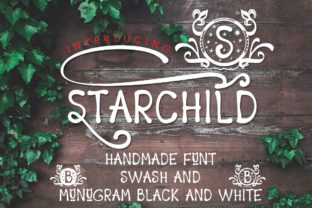
Starchild Font: A Handwritten Script for Makers and Shops
I first stumbled on Starchild while hunting for a script handwritten typeface that could actually sell a product on sight. So many fonts look great in a mockup but fall apart when you cut vinyl or print on textured cardstock. Starchild doesn’t do that. It carries a striking, almost celestial confidence, yet the letterforms stay crisp and readable. That balance is rare, especially for a script with built-in monograms. If you run a small handmade shop or sell printable designs, this font works like a silent branding assistant — it does the heavy lifting for your product presentation without feeling overstyled.
Starchild Script Font for Handmade Product Labels and Packaging
Using a script handwritten font on product labels is a gamble. If the strokes are too thin, your text vanishes on kraft paper. If the flourishes are too wild, nobody reads the ingredient list. Starchild solves that by merging a striking, upright script personality with a weight that holds its own on candle jars, soap boxes, and honey tins. The moment I printed a test sheet of spice blend labels with Starchild, the perceived value of the whole line jumped. The lettering has enough character to feel bespoke, but it’s not so delicate that your printer or cutting machine mangles the curves.
Here’s what I’ve found works beautifully with Starchild for packaging:
- Artisan candle labels — the monograms double as a focal icon right above the scent name.
- Bakery boxes and cookie bags — short product names in Starchild look like high-end boutique lettering.
- Small-batch skincare — ingredient headers stay readable while the brand name shines in display size.
- Tea and latte blend pouches — the handwritten texture adds warmth that a sterile sans serif never could.
For short phrases and display use, Starchild is a premium font that makes a product feel intentional. Customers read that care as quality. And because it includes monograms, you don’t need to source a separate decorative element for the center of a sticker or hang tag.
Starchild Handwritten Font for Wedding Stationery and Invitation Design
Wedding clients want something that feels like a keepsake before they even open the envelope. A script handwritten font like Starchild instantly delivers that romantic, bespoke mood. I’ve used it for invitation suites, table numbers, welcome signs, and belly bands. The striking upright flow reads beautifully on vellum overlays and pearlescent cardstock. It doesn’t skew too casual like a rough brush font, nor does it feel stiff and formal like a copperplate that costs you legibility at smaller point sizes.
In practical terms, Starchild holds its shape on 5x7 invitation cards when printed at a range of weights. For display use — think a 16-inch wooden welcome sign — it cuts cleanly on a Cricut Maker or Silhouette Cameo without breaking the thin connectors. The monograms are an added bonus for envelope liners, wax seal stickers, and custom napkin bands. I often use the standalone monogram as an elegant watermark on response cards. It ties the suite together without adding clutter.
If you sell editable invitation templates or semi-custom suites, embedding Starchild in your Corjl or Templett designs gives clients that elevated look immediately. The emotional appeal is in the details: the slight bounce of the baseline, the way the capitals sweep upward. It’s a strong brand identity anchor for stationery designers who lean into romantic, celestial, or modern bohemian aesthetics.
Starchild for Cricut and Silhouette Craft Projects
Crafters who cut vinyl, iron-on, or stencil material need a script handwritten font that doesn’t fight back. Starchild is one of those rare finds where the preview matches the post-cut reality. I tested it on adhesive vinyl at 1.5 inches for a small mug decal, and even the thinnest loops weeded without tearing. The striking style doesn’t rely on ultra-hairline strokes, which means your blade isn’t picking up microscopic splinters of vinyl that ruin the transfer.
Projects where Starchild shines for cutting machines:
- Tote bag heat transfers — names or short quotes press cleanly onto canvas without losing detail.
- Glass etching cream stencils — the monograms produce a gorgeous frosted effect on stemware.
- Farmhouse-style wooden signs — Starchild adds a collected, curated feel without looking like a generic stencil.
- Holiday ornaments — personalized acrylic or ceramic disc tags cut smoothly and sell well at craft fairs.
Always run a test cut on your specific material. I find that a light-grip mat and a fresh fine-point blade yield the best results for the connecting strokes. If you sell physical decal packs or custom-name products, Starchild gives you a consistent commercial font that customers will associate with your shop’s signature look.
Creating Starchild Monograms for Personalized Gifts and Apparel
The built-in monograms are what set Starchild apart from dozens of other script handwritten fonts I own. A well-designed monogram can instantly make a plain tote bag or a simple ceramic mug look like a custom boutique item. Starchild’s monograms have that striking, decorative structure — they’re designed to be a focal point. I use them on wedding koozie stencils, embroidered hoop art mockups, and leather patch earrings. The monograms scale beautifully because the weight isn’t too fragile; you can blow one up to five inches for a baby onesie and still have a smooth curve.
Apparel and gift ideas that sell well with these monograms:
- Embroidered crewnecks — the monogram gives a collegiate, preppy vibe without the traditional block serif.
- Leather keychains — debossed or foil-pressed monograms look substantial.
- Wood slice coasters — a single letter monogram in Starchild plus a botanical wreath vector creates a complete design.
- Glass can tumblers — permanent vinyl monograms resist peeling and remain legible after repeated hand washing.
When selling custom monogram goods, always check the commercial font license to ensure you can use the monograms on physical merchandise. Starchild’s licensing typically covers these applications for small shop owners, but it’s wise to confirm that selling products with the monogram is covered, especially if you operate on Etsy or a standalone website.
Starchild Font for Digital Printables and Planner Templates
Printable shop owners need a script handwritten font that renders cleanly on screen and on home printers. Starchild fits that niche because its letterforms are deliberate, not overly textured. In printable wall art, a celestial-themed “You Are Stardust” quote set in Starchild becomes a striking nursery or boho bedroom piece. The script adds movement, while the monograms act as decorative flourishes that anchor the composition.
For planners and organizational printables, I use Starchild strictly for headers, section dividers, and monthly cover pages. It’s not intended for long body text; a full paragraph in this display font would fatigue the eye. Pair it with a clean sans serif font for the weekly spreads and a simple serif font for journaling blocks. The contrast makes the planner pages feel layered and professional. Customers who buy wellness journals, recipe card templates, and budget planner kits consistently remark on the “expensive” look — and much of that comes from a well-chosen script for the titles.
If you sell editable printables, embed Starchild carefully. Provide a flattened PDF with the script embedded as outlines, or offer a link to purchase the font alongside the template. This keeps your design assets secure and guides your customer toward proper use.
Pairing Starchild with Clean Sans Serif and Serif Fonts for Product Designs
Starchild’s striking personality means it needs a team player, not a competitor. When I design product packaging or invitation suites with this script handwritten font, I almost always pull in a neutral workhorse. Pairing recommendations that have worked in my own shop:
- Sans serif pairings: A geometric sans like Montserrat or a humanist sans like Open Sans. Use the sans for body copy, ingredient descriptions, and back-of-card details. Starchild holds the spotlight for product names and titles.
- Serif pairings: A classic transitional serif or a slightly condensed display serif. This creates a vintage-meets-modern-romance feel for wedding signage and wax melt packaging.
- Stacking tip: Set the main word in Starchild at a large display size, then place a subheading in all-caps sans serif beneath it. The monogram can sit centered above or to the left. This trio creates a complete logotype without extra design work.
Always check contrast. If Starchild feels too light in a pairing, increase the script weight slightly or add a subtle outline in your design software. But avoid bolding it artificially in a word processor — use the font’s own stylistic alternates or ligatures for variation. Many users overlook the included ligatures that prevent awkward letter collisions. Open the glyphs panel in Adobe Illustrator or Inkscape and look for alternate swashes that fit your specific letter combos.
Commercial Licensing for Starchild: Selling Physical Products, Printables, and SVG Designs
One of the most overlooked steps for crafters using a script handwritten font is verifying the commercial font license. Starchild is a creative asset many makers fall in love with for its striking style and monograms, but before you list that printable wall art or custom-engraved cutting board, you need to know what your license permits. Usually, a standard commercial license covers digital and physical products where the font isn’t the primary value — meaning you can sell a finished tote bag with a quote, but you can’t sell the font file itself. If you create SVG design packs or editable templates where the customer needs to install Starchild to use the file, you typically need an extended or embedding license.
I keep a simple checklist for every new font I buy for my shop:
- Physical products: Am I selling shirts, mugs, signs, stickers, or labels? Standard commercial use usually covers this.
- Digital downloads: Am I selling a flattened printable (JPG or non-editable PDF)? Often covered. If I’m selling editable templates or SVG cut files with text as outlines, I verify that outlines are considered a protected image of the letterforms.
- Client work: If I design a logo for a client using Starchild, I either purchase a desktop license for them or ensure my own license covers logo creation. Trademarking a design with the font may require additional permission.
- Embedding: Embedding Starchild in a mobile app, e-book, or website requires a special license. For a standard product label design exported as a PNG, this typically isn’t an issue.
Starchild has become a staple in my craft font library because it pairs striking visual impact with practical production needs. Whether you’re creating wedding stationery, boutique candle labels, or personalized gifts, investing in a premium font with clear licensing protects your business and returns value with every product you sell. Take time to read the licensing text that comes with your download, use the monograms as design shortcuts, and pair Starchild thoughtfully with supporting typefaces to build a brand identity that stands out in any marketplace.